
“Education doesn’t need selling. It needs telling — the honest stories of children, teachers, and moments that shape a school’s soul.”
Marketing in education is perhaps one of the most misunderstood conversations in India—and, truthfully, in many parts of the world.
Whenever I tell someone I specialise in marketing for schools and colleges, I often see that familiar raised eyebrow.
It silently asks:
“Why does a school need marketing? Isn’t education supposed to be noble… non-profit… above all this?”
The hidden judgement is unmistakable:
“Has education become a business now?”
For years, this perception has oversimplified what marketing really means in the educational ecosystem. Because, to me, marketing is not about luring customers—it is about communicating identity, sharing values, and helping families make informed choices in an increasingly diverse educational landscape.
And that landscape is changing faster than most people realise.
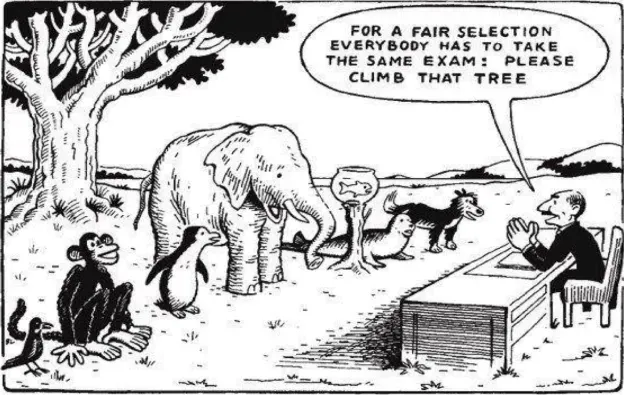
The Myth: “Education is One-Size-Fits-All”
Today’s parents do not choose schools the way their parents did.
And children—yes, children—are now active decision-makers.
A Deloitte survey found that 63% of Gen Z learners research institutions online before joining any program.
In India, a 2024 HT Media Insights report showed that 72% of parents consult student reviews and campus stories on digital platforms before admission enquiries.
Education is no longer one stream, one style, one philosophy.
- Curriculum differs (CBSE, ICSE, IB, Cambridge, State Boards, Hybrid Boards).
- Teaching methods differ.
- Values differ.
- Exposure differs.
- The very definition of a “good school” differs from family to family.
So how does a parent know which institution aligns with their child’s needs?
This is where responsible, authentic marketing becomes not just relevant, but essential.
Let’s be clear:
Marketing in education is not about selling.
It is about telling.
Marketing becomes a medium through which institutions articulate:
- Who they are
- What they stand for
- What they do differently
- How they impact the lives of children
It’s the way a school opens a window into its world—its culture, its classrooms, its playgrounds, its voices, its values.
And in today’s noisy world of “Admissions Open” billboards, those who communicate with clarity, empathy, and authenticity stand out.
I have always believed this:
A school that appears only during admission season is not a school built for children—it is a school built for sales.
On the other hand, a school that tells the stories of its children, teachers, parents, and everyday triumphs—that is a school built on heart, rooted in purpose.
Because storytelling is the soul of education.
Education itself is a storytelling profession—we explain concepts through stories, build character through stories, transmit values through stories.
So why shouldn’t marketing also follow the same principle?
Let me say this directly:
A school which says “Let Them Smile” has more value to me than a school that says “International Facilities” in big bold letters.
Facilities are important.
But feelings remain longer.
A child’s smile tells more truth than any brochure ever can.
Storytelling Must Lead the Way
Because:
- Stories are remembered.
- Stories build trust.
- Stories humanise institutions.
- Stories show impact.
- Stories reveal the invisible magic of school life.
We forget advertisements.
But we remember moments.
We remember a child tying another child’s shoelace.
A teacher comforting a crying student.
A principal kneeling down to talk eye-to-eye with a five-year-old.
A parent saying, “My child loves coming to school.”
That is the marketing that moves hearts.
That is the marketing that builds legacy.
And stories come from its children.
When schools ask me,
“Sir, what should we post? How should we market ourselves?”
I give them only one timeless answer:
Capture your children’s feelings.
Capture their joy.
Capture their fears.
Capture their moments that matter.
Capture what makes your school a second home, not a business centre.
Marketing should not be a megaphone.
It should be a mirror—one that reflects the school’s soul.
So the next time someone asks,
“Why does a school need marketing?”
smile and tell them:
Because every child deserves a school whose story they can connect with.
And every great school deserves to have its story told.